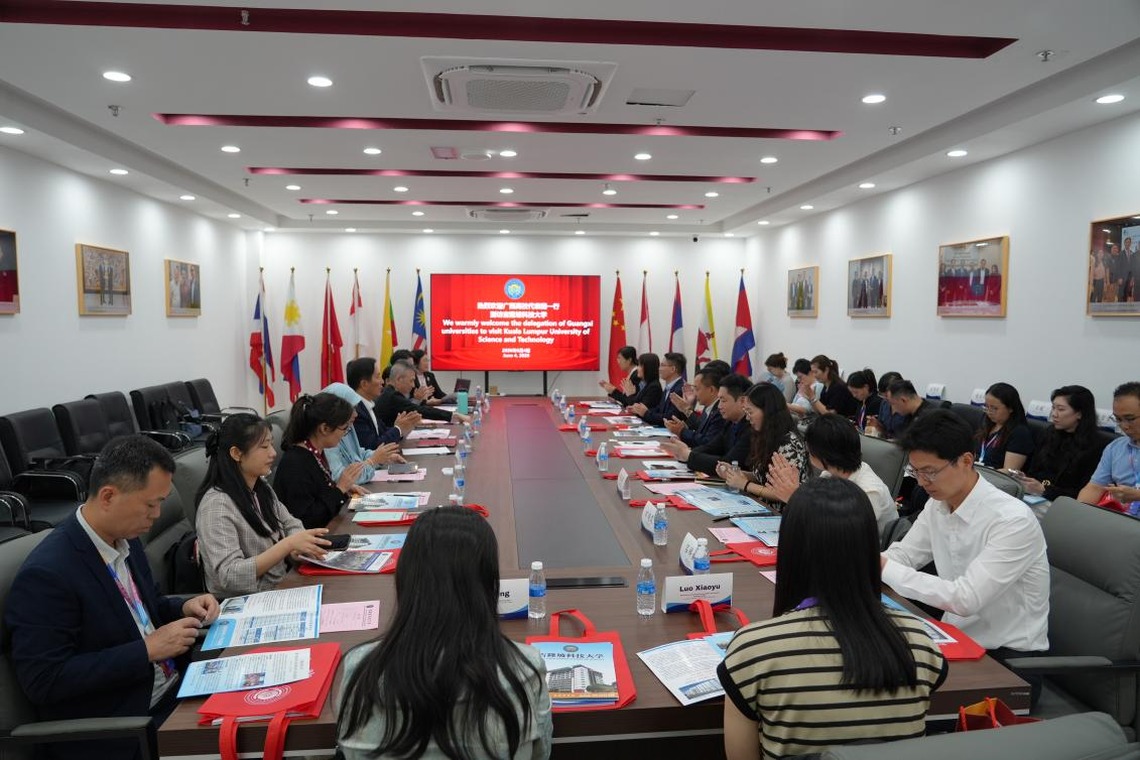
On 4 June 2026, a delegation of 24 universities and higher education institutions from the Guangxi Zhuang Autonomous Region, led by Mr Wu Jinchang, Vice Director-General of the Guangxi Department of Education, visited Kuala Lumpur University of Science and Technology (KLUST) as part of the 2026 “Study in Guangxi” International Education Exhibition in Malaysia. The visit marked an important stop in the delegation’s Malaysia programme, aimed at strengthening education cooperation between Malaysia and China and expanding international academic exchanges. Discussions focused on potential collaboration in talent development, curriculum co-development, industry–education collaboration, joint research, and student and staff mobility.
The delegation comprised representatives from 15 universities and 9 vocational institutions across Guangxi. Participating universities included Guangxi University, Guangxi Normal University, Guangxi Medical University, Guangxi Minzu University, Guilin University of Electronic Technology, Guilin University of Technology, Guangxi University of Chinese Medicine, Guangxi University of Science and Technology, Nanning Normal University, Beibu Gulf University, Guilin Medical University, Guangxi Arts University, Guangxi Minzu Normal University and Guilin University of Aerospace Technology. The vocational institutions included Guangxi Vocational University of Agriculture, Nanning Vocational and Technical University, Liuzhou Polytechnic University, Guangxi Vocational and Technical College, Guangxi Vocational College of Water Resources and Electric Power, Guangxi Communications Vocational and Technical College, Guangxi International Business Vocational College, Liuzhou Railway Vocational and Technical College, Liuzhou City Vocational College, and Guangxi Financial Vocational College.
KLUST was represented by Professor David Ngo Chek Ling, Vice-Chancellor, and Professor Suraya, Deputy Vice-Chancellor. They welcomed the delegation and presented the university’s academic development and internationalisation strategies.
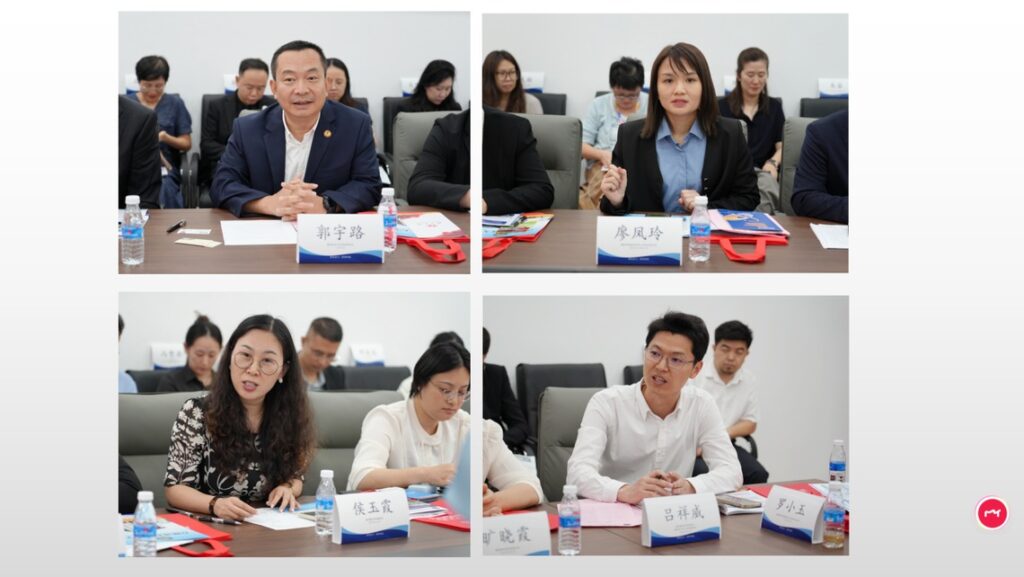
During the exchange session, representatives from the Guangxi institutions introduced their respective universities and shared potential areas of collaboration with KLUST based on their academic strengths and strategic priorities. Discussions covered a wide range of topics, including academic complementarity, talent development, research collaboration, and resource sharing, reflecting a strong mutual commitment to building meaningful partnerships. Both sides engaged in in-depth discussions on future cooperation and agreed to further explore opportunities in talent development, student and staff mobility, joint research, and curriculum co-development. Delegates also gained a deeper understanding of KLUST’s educational philosophy, academic strengths, research capabilities, and experience in international collaboration.
Mr Guo Yulu, Deputy Director of the Office of International Cooperation and Exchange at Guangxi University, noted that the two institutions had previously signed a Memorandum of Understanding, providing a solid foundation for collaboration in student development, faculty exchange, and research. He also highlighted Guangxi University’s leadership in establishing the Asian Infrastructure Cooperation Organisation and expressed appreciation for KLUST’s active support and prompt engagement, with the shared goal of contributing to regional development.
Mr Fan Wenji, Deputy Dean of the International College at Guangxi Normal University, expressed interest in expanding cooperation with KLUST in areas such as joint research, cultural exchange, and “Chinese Language + Vocational Skills”, leveraging the strengths of both institutions to promote innovation and academic collaboration.
Ms Yu Li, Deputy Dean of the International Education College at Guangxi University of Chinese Medicine, shared the university’s aspirations to strengthen collaboration in the internationalisation of traditional Chinese medicine through talent development, research partnerships, and industry engagement, with the aim of enhancing healthcare cooperation between Malaysia and China.
Ms Liao Fengling, Director of the Admissions Office at the International College of Guilin University of Electronic Technology, noted the close collaboration between the two institutions in recent years and expressed hope of further expanding cooperation in academic programmes, student and staff exchanges, and research innovation.
Mr Lü Xiangwei, Deputy Dean of the International Education College at Guilin Medical University, highlighted the university’s strengths in intelligent medicine and expressed interest in working with KLUST to advance research and innovation at the intersection of artificial intelligence and healthcare.
Ms Tang Yuqin, Office Director of the International Education College at Liuzhou Polytechnic University, shared the university’s expertise in intelligent manufacturing and modern services, and looked forward to collaborating with KLUST on programme development, practical training initiatives, and the cultivation of internationally oriented technical talent.
Mr Feng Zanyuan from the ASEAN International College of Guangxi Communications Vocational and Technical College emphasised the importance of strengthening cooperation in smart transportation and vocational education, building on previous exchanges between the two institutions and the jointly established Malaysia–China Smart Transportation Craftsman College.
Overall, the discussions demonstrated strong enthusiasm from both sides to deepen cooperation and explore new opportunities in education, research, innovation, and talent development for the benefit of Malaysia, China, and the wider ASEAN region.
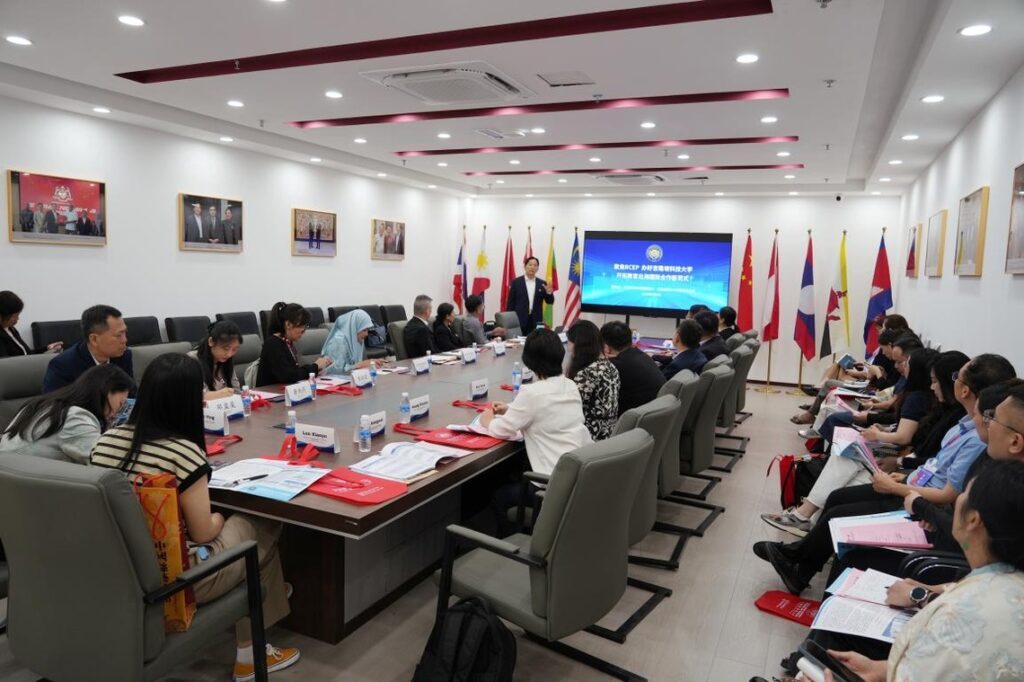
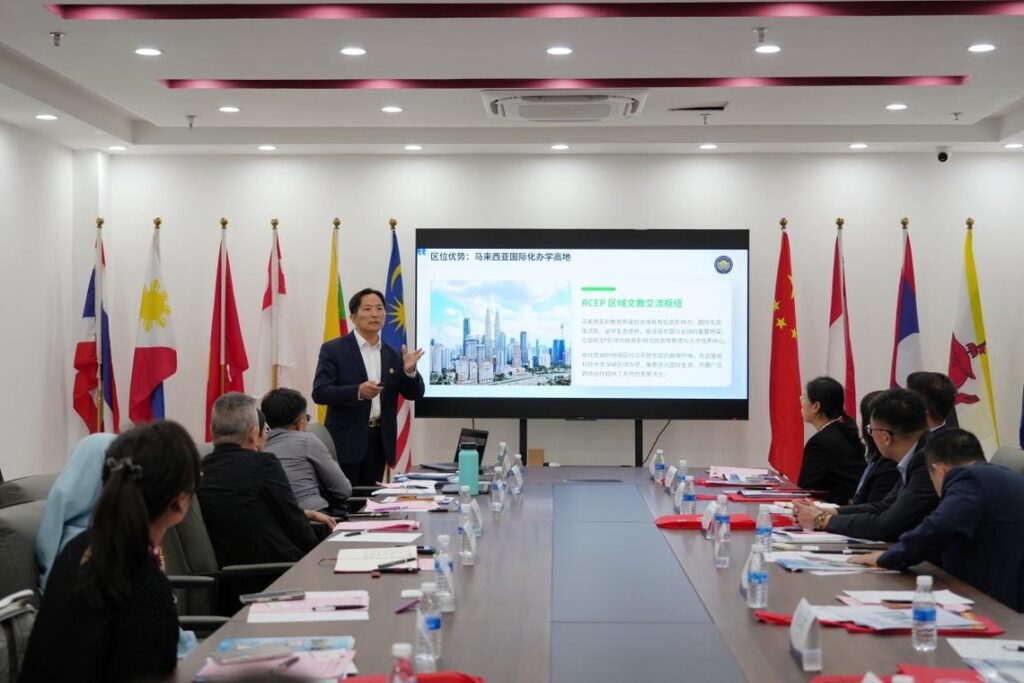
Professor Chen Xiaoyun, Chairman of the KLUST Board of Directors, delivered a keynote address titled “Focusing on RCEP to Develop New Models of International Education Cooperation”. He introduced KLUST’s development strategy and emphasised the university’s commitment to international industry–education integration, education internationalisation, and regional collaboration under the Belt and Road framework.
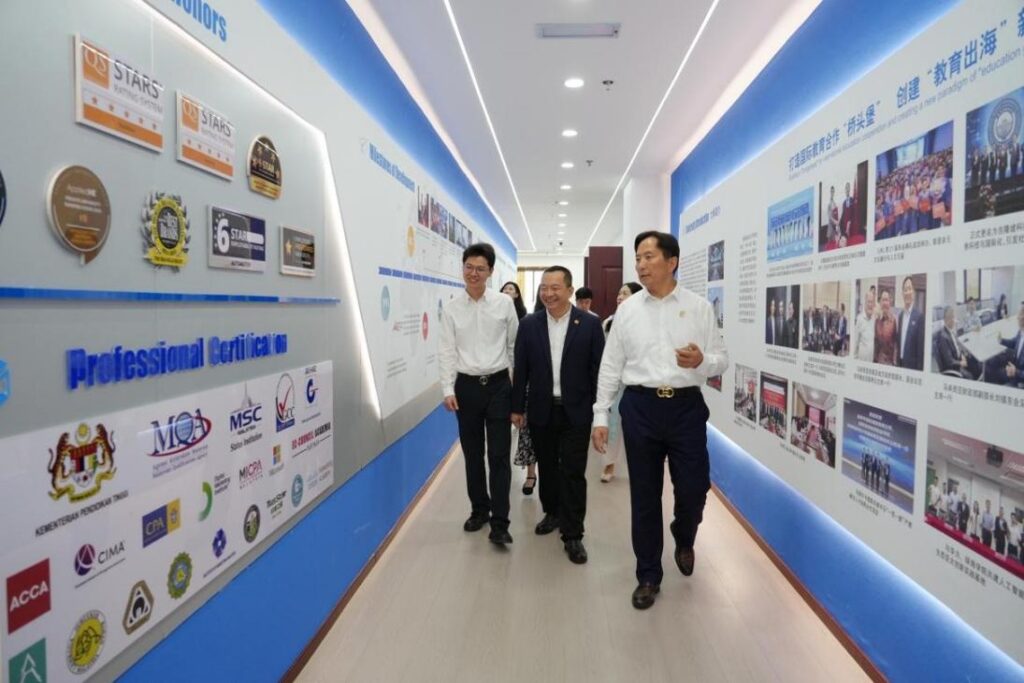
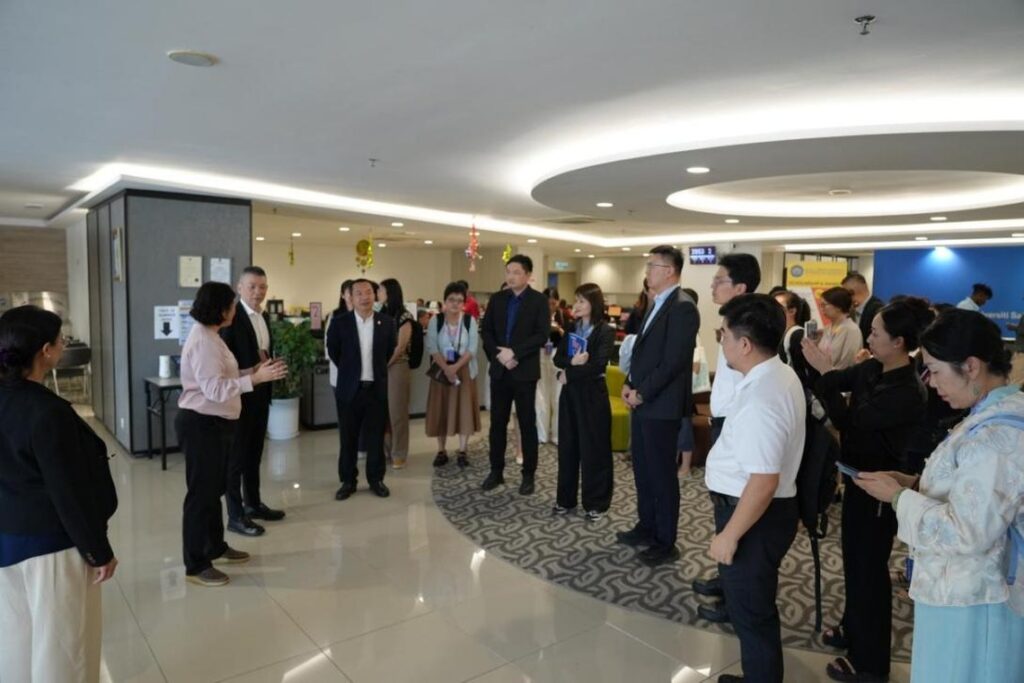
The visit also included a campus tour of KLUST’s teaching and learning facilities, including the student service center, laboratories, and applied learning spaces in engineering, ICT, artificial intelligence, and digital technologies.
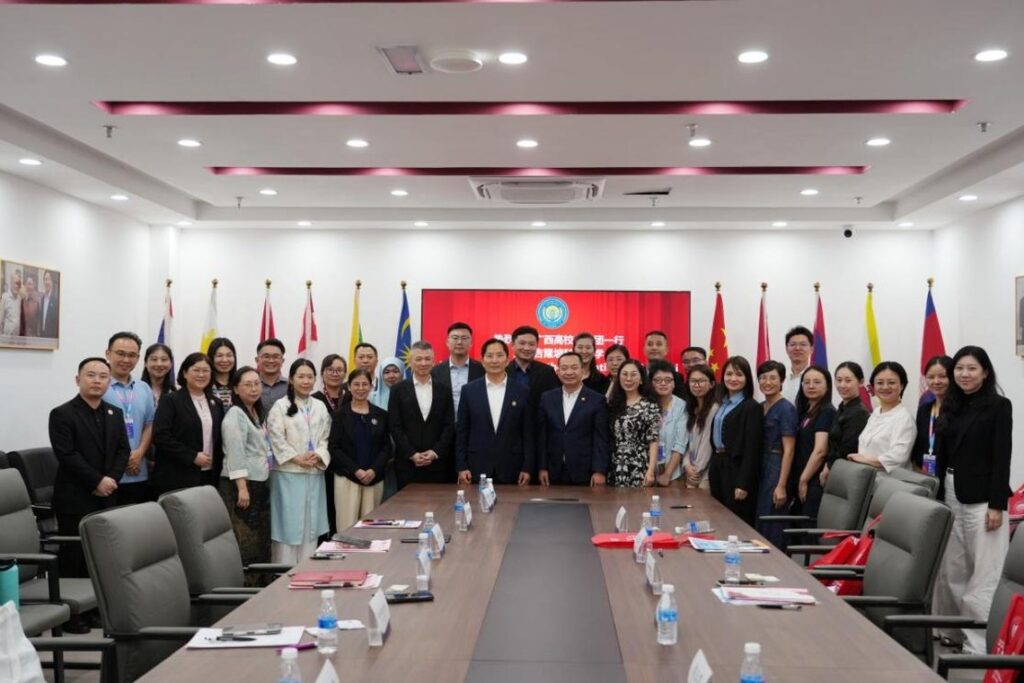
KLUST currently maintains close partnerships with several institutions in Guangxi, including Guangxi University, Guilin University of Electronic Technology, and various vocational colleges and industry partners. This visit further strengthened the foundation for future cooperation and advanced Malaysia–China collaboration in higher education.