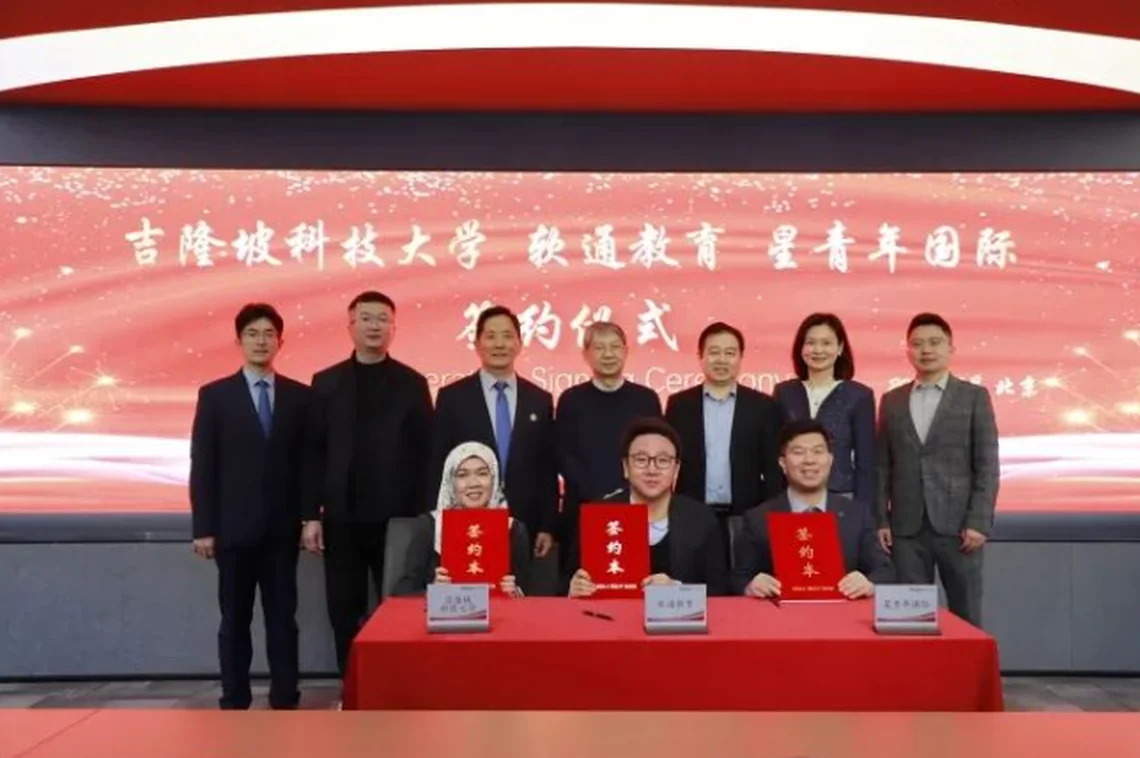
To further deepen industry-education integration and university-enterprise collaboration while innovating talent cultivation models, a cooperation signing ceremony was held on February 13,2026, at Softcom Power’s headquarters between Kuala Lumpur University of Science and Technology and Beijing Softcom Leading Technology Co., Ltd. (a subsidiary of Softcom Power). Star Youth International Group, the parent company of Kuala Lumpur University of Science and Technology, participated as a joint participant, marking the formal establishment of a strategic partnership among the three parties to jointly establish and operate a Digital Technology Industry College on the university’s campus. Attendees included Chen Feng, former Deputy Director-General of the Ministry of Education’s Development Planning Department and former Director of its School Planning and Construction Development Center; Chen Xiaoyun, Chairman of Star Youth International Group, Board Chairman of Kuala Lumpur University of Science and Technology, and Chairman of Anhui Luhai Business Vocational College; Su Laiya, Vice President of Kuala Lumpur University of Science and Technology; Gao Yan, Chief Strategy Officer of Softcom Education; and Professor Chen Guoquan from Tsinghua University’s School of Economics and Management. The event focused on exploring new pathways for Sino-Malaysian industry-education integration and charting a high-quality development blueprint for digital technology talent cultivation in ASEAN.
This trilateral cooperation represents a significant initiative in responding to the global digital transformation and implementing the Belt and Road education international cooperation framework, as well as a key exploration of China’s industry-education integration model in ASEAN. Adhering to the principles of “equality, mutual benefit, complementary advantages, and collaborative development,” the three parties have joined forces with renowned domestic and international enterprises, industry organizations, universities, and research institutions, leveraging industrial resources such as Huawei and SoftPower to jointly establish a practice platform, an Artificial Intelligence Digital Empowerment Innovation Research Center, and a Digital Technology Industry College. According to the cooperation plan, the joint venture formed by the three parties will effectively integrate industrial resources, with SoftPower at its core, supporting industry enterprises in establishing a joint subsidiary at the National University of Singapore, extending certain business operations, production lines, and practical activities onto campus, thereby truly achieving “enterprises entering campuses” and fostering a new ecosystem of industry-education integration where both sides are interdependent, thereby unleashing the core momentum of university-enterprise collaboration. Meanwhile, this model provides a solid foundation for relevant enterprises to expand markets, implement application scenarios, and broaden their growth prospects in Southeast Asia.
The Kuala Lumpur University of Science and Technology was acquired and upgraded by Star Youth International Group in 2024 and officially renamed at the beginning of 2025. It consistently ranks first among private applied universities in Malaysia and second in the ASEAN region for Applied HE in 2023. The university spans 600 acres, with students hailing from over 40 countries worldwide. It offers 28 undergraduate programs, 16 master’s programs, and 10 doctoral programs, and has established diverse collaboration platforms such as the Luban Workshop, making it a benchmark for applied research universities in ASEAN. Beijing Softcom Navigation specializes in ICT talent cultivation, leveraging its industrial background and mature system to bridge the “last mile” in corporate recruitment. Its parent company, Softcom Dynamics, employs over 90,000 staff, including 40,000 dedicated to technical services for leading enterprises such as Huawei, Tencent, and Xiaomi, while also providing professional technical support to international tech giants like NVIDIA. Its education arm, Softcom Education, has established deep collaborations with numerous undergraduate and graduate institutions nationwide, creating an integrated talent development pathway spanning bachelor’s, master’s, and doctoral levels, thereby laying a solid foundation for cultivating applied engineers, engineering professionals, and AI digital talents. Star Youth International Group focuses on international education investment management, offering professional global operational support for partnerships.
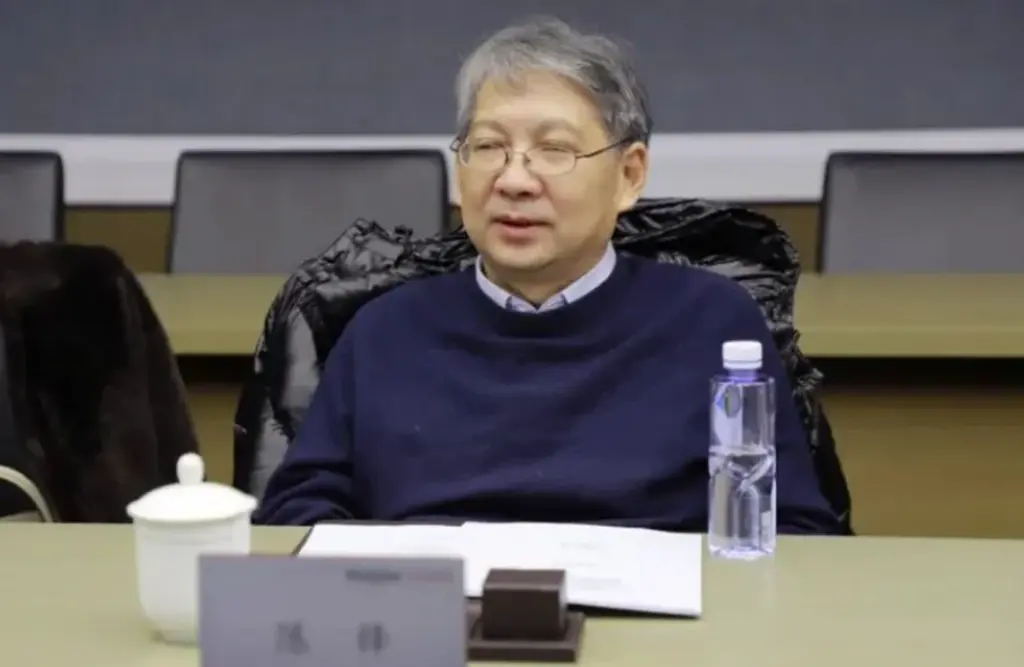
At the signing ceremony, Director Chen Feng highly praised this collaboration based on the national policy orientation of industry-education integration and the trend toward educational internationalization. He emphasized that industry-education integration is the key to high-quality development in higher education. Over the years, Softcom Education has dedicated itself to this field, accumulating extensive experience in cultivating industrial talent and establishing a mature ICT talent training system. This partnership with Kuala Lumpur University of Technology represents an important attempt to extend China’s proven industry-education integration model beyond its borders and into ASEAN. He noted that the rapid development of the digital economy in ASEAN creates an urgent demand for high-caliber technical professionals. Softcom Education will leverage its industrial resource advantages to integrate China’s industry-education integration expertise with Malaysia’s educational realities, avoiding cultural mismatches, and develop a talent cultivation system tailored to the ASEAN market. This initiative aims to establish industry colleges as a model for Sino-Malaysian vocational education cooperation, provide replicable and scalable experiences for the high-quality development of vocational education under the Belt and Road Initiative, and supply technical talents meeting ASEAN’s needs for international industrial collaboration, thereby facilitating the global implementation of China’s industry-education integration model and industrial resources.
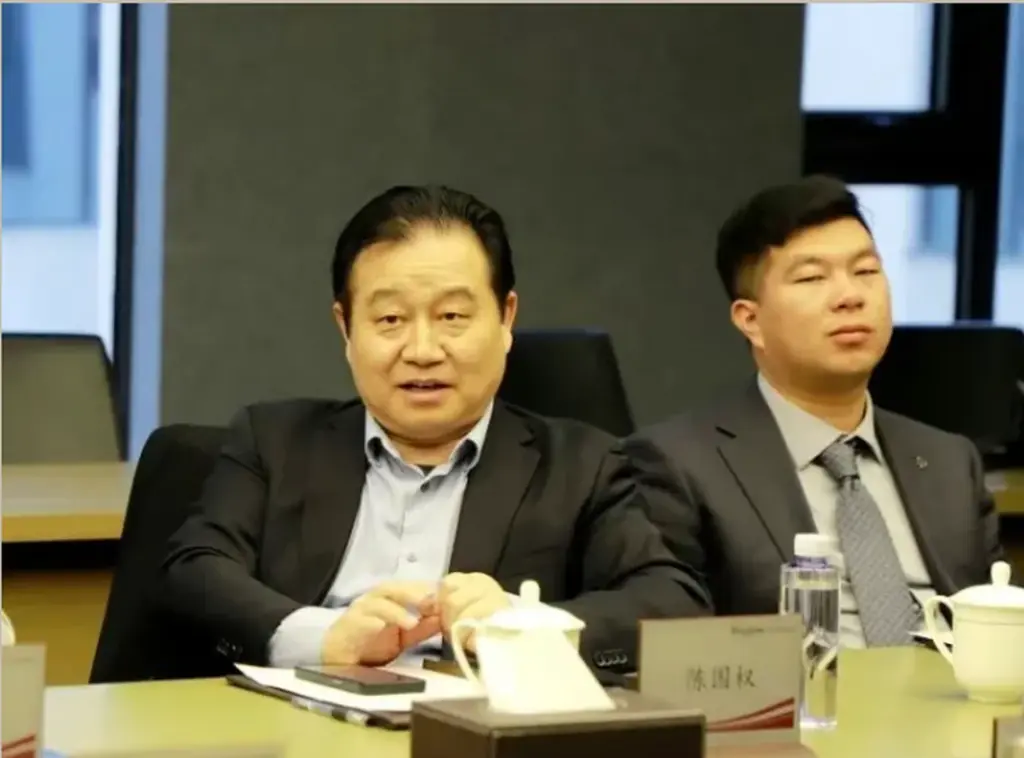
Professor Chen Guoquan provided an in-depth interpretation of the value of this trilateral cooperation, stating that it has achieved cross-border integration of educational and industrial resources, precisely meeting the international talent cultivation needs of the digital economy era. It not only supplies high-quality technical talents for ASEAN’s digital economic development but also provides localized talent support for Chinese enterprises to expand their presence in Southeast Asia and deepen their market presence in ASEAN. This represents a significant breakthrough in the internationalization of China’s higher education. He expressed anticipation that the three parties will establish the industry college as a benchmark for Sino-Malaysian vocational education cooperation and a demonstration platform for industry-education integration.
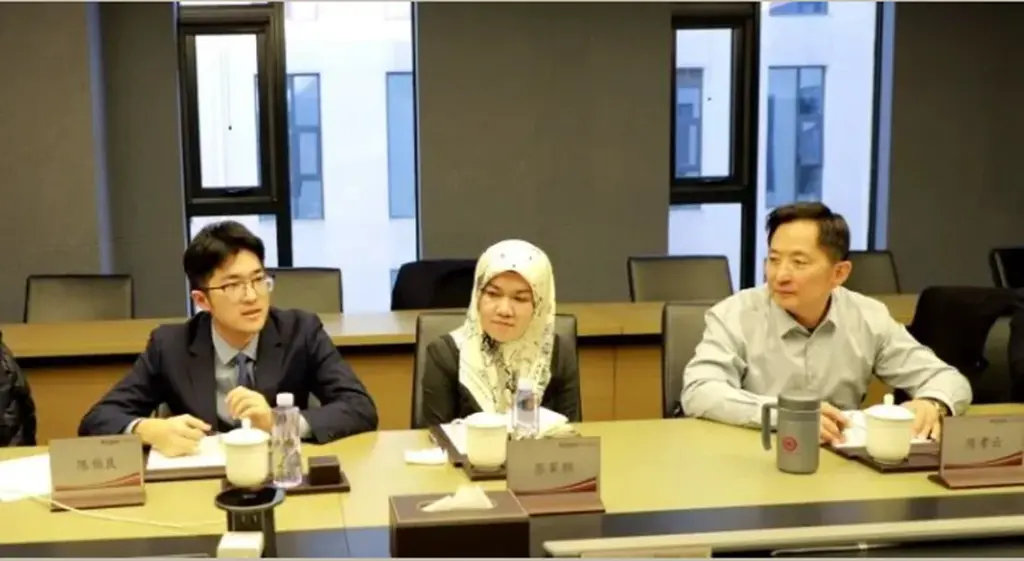
As the university representative of Kuala Lumpur University of Technology, Vice President Suleya stated that the university will strictly fulfill its responsibilities as a partner by providing comprehensive qualification documents for the industrial college’s program offerings and enrollment plans, establishing a robust educational quality assurance system to ensure the academic standards of collaborative projects. Additionally, the university will fully support the industrial college in venue renovation, teaching resource allocation, and faculty collaboration. Leveraging its strong reputation and disciplinary expertise within Malaysia’s education sector, it aims to build a solid local educational platform for China-Malaysia cooperation, facilitate localized adaptations in curriculum development and talent cultivation standards, and achieve effective alignment between bilingual Chinese-English course standards and Malaysia’s local industry needs.
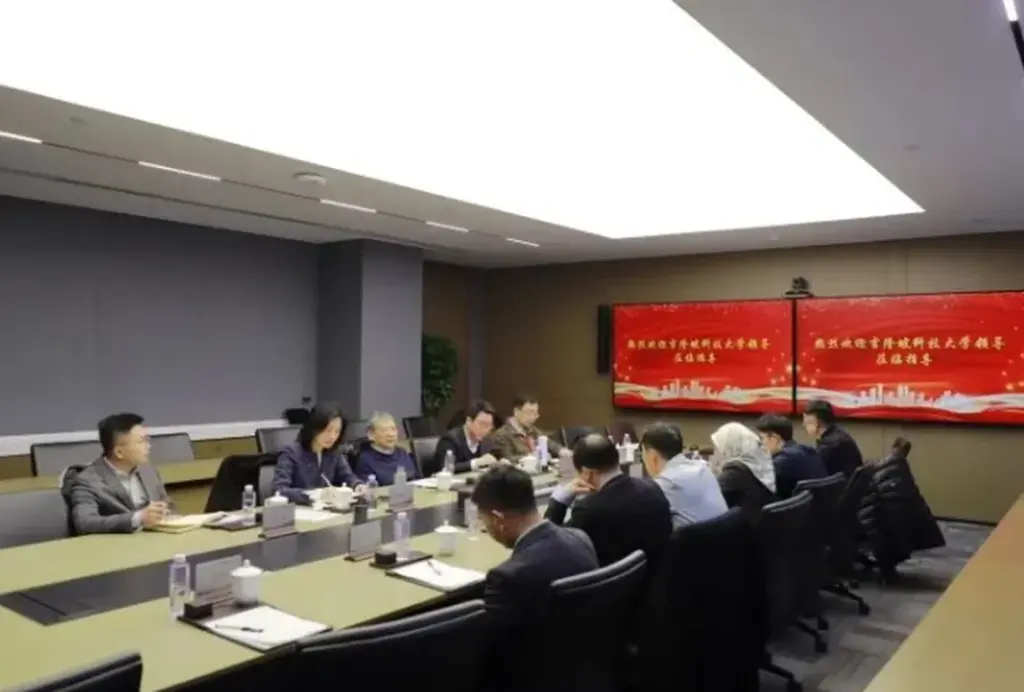
Gao Yan, Chief Strategy Officer of Softcom Education, provided a detailed overview of collaboration implementation and operational planning. He stated that Softcom Navigation would leverage its industry expertise to provide industrial colleges with a mature industry-education integration training model, establish a dual-qualified faculty team responsible for developing and implementing core professional courses and practical training programs, and facilitate the introduction of industrial practices into campus settings through Softcom Power’s Malaysian subsidiary, thereby creating a closed-loop system encompassing teaching, hands-on training, and industry application. Leveraging Softcom Education’s nationwide network of institutional partnerships and its integrated undergraduate-to-doctoral education pathway, the three parties will also strengthen talent development links between China and ASEAN countries, jointly enhance Chinese language teaching resources, share intellectual property rights, and promote these innovations across ASEAN. Additionally, they will offer comprehensive internship and employment services for graduates, establishing a seamless continuum from training to internships and employment for ASEAN-based digital technology and engineering professionals, thereby supporting the phased cultivation of local AI and technical talent in the region.
Chairman Chen Xiaoyun elucidated the core value of this collaboration from the perspective of educational outreach under the Belt and Road Initiative, emphasizing that educational outreach represents a key direction for Sino-Malaysian educational cooperation within this framework. The Belt and Road Initiative itself is also a path of innovation, hope, and excellence. The renaming and upgrading of Kuala Lumpur University of Science and Technology aim precisely to align China’s educational resources with ASEAN’s industrial needs. This partnership with Softcom Navigation serves as a crucial initiative in building an international community for educational outreach in ASEAN. Kuala Lumpur University of Science and Technology has established a comprehensive talent development framework tailored to ASEAN’s needs, leveraging its digital technology industry college as a platform, local educational credentials, and the international operational strengths of its Star Youth program. Through a tripartite collaboration model involving universities, enterprises, and local institutions, the university aims to cultivate high-caliber technical professionals with global vision, cross-cultural communication skills, and expertise aligned with ASEAN’s industries, thereby injecting essential human capital into ASEAN’s industrial upgrading efforts.
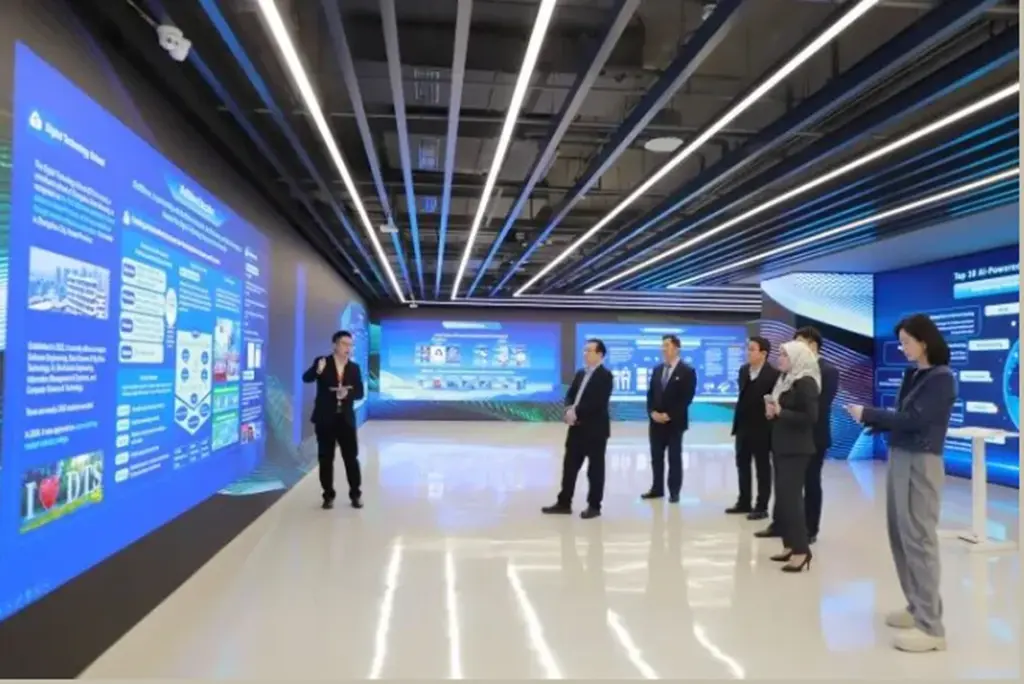
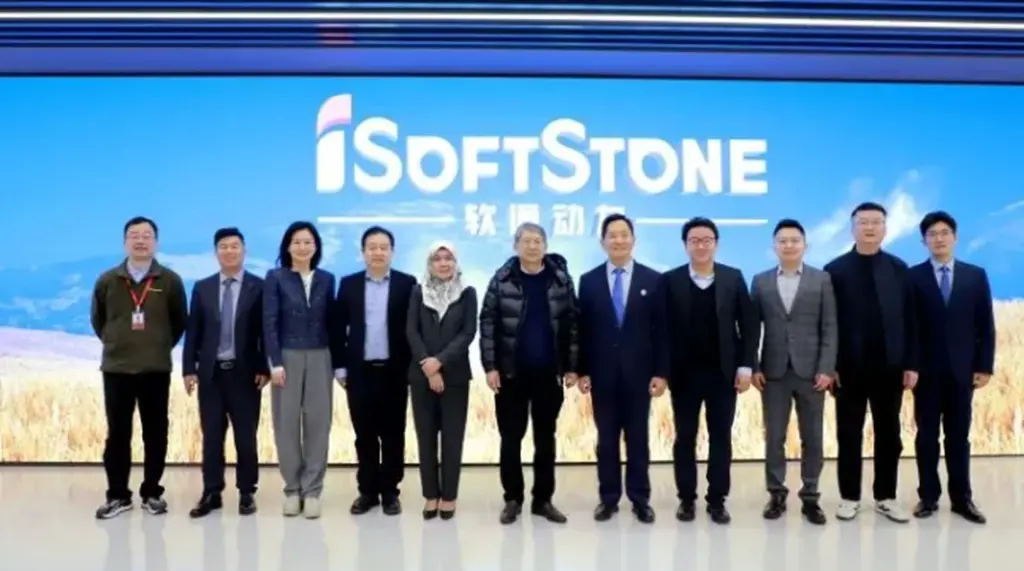
Previously, Softcom Education, the education division of Softcom Power, established an industry college at Anhui Luhai Business Vocational College on the China campus of Kuala Lumpur University of Science and Technology. In the next step, the three parties will promote multi-party collaboration.
The successful holding of this signing ceremony marks a new phase in the international expansion of Sino-Malaysian educational integration, facilitated by Star Youth International Group as the link between Anhui Luhai Business Vocational College and Kuala Lumpur University of Science and Technology. Moving forward, the three parties will focus on the industry college as the core to deepen comprehensive cooperation in curriculum development and faculty building, continuously expand the scope of academic programs, and establish a benchmark base for ASEAN digital technology talent cultivation as well as a demonstration platform for Sino-Malaysian industry-education integration. This initiative aims to provide sustained support in AI, digital, and technological talent for ASEAN’s industrial upgrading and international capacity cooperation, ensuring that the outcomes of Sino-Malaysian industry-education collaboration benefit more ASEAN countries and contribute to international educational cooperation under the Belt and Road Initiative as well as the development of the digital economy.