The developments signal the university’s commitment to strengthening industryacademia collaboration and preparing talent for an increasingly technology-driven economy.
Universities face a growing challenge: academic institutions must remain relevant as technology reshapes industries and changes the skills employers demand. For Kuala Lumpur University of Science and Technology (KLUST), addressing this challenge requires more than updating academic programmes. It calls for a broader rethink of how the university organises its academic strengths and connects them with the world beyond campus.
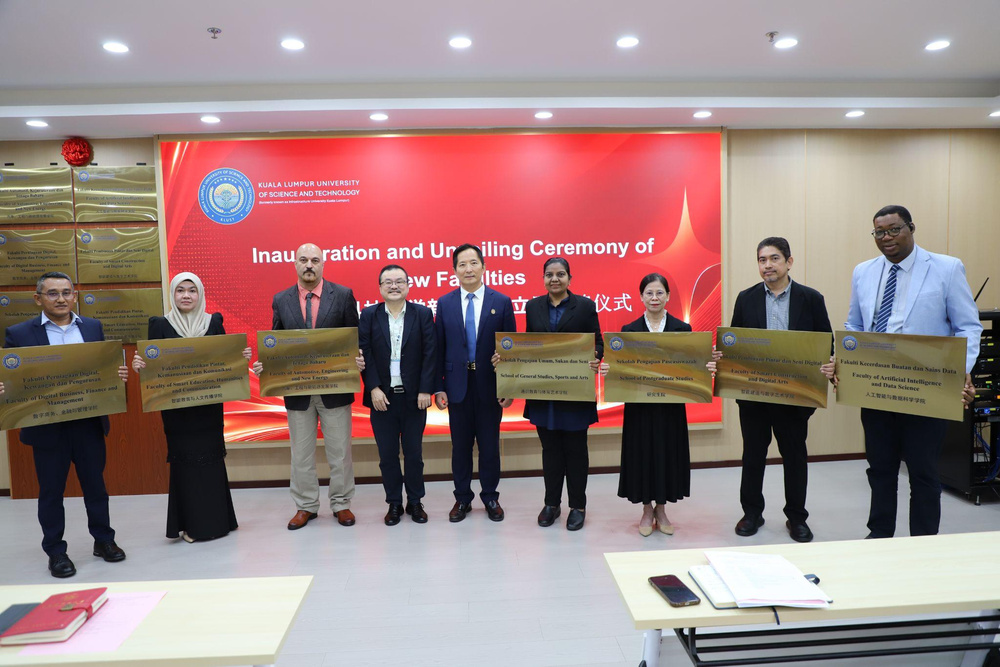
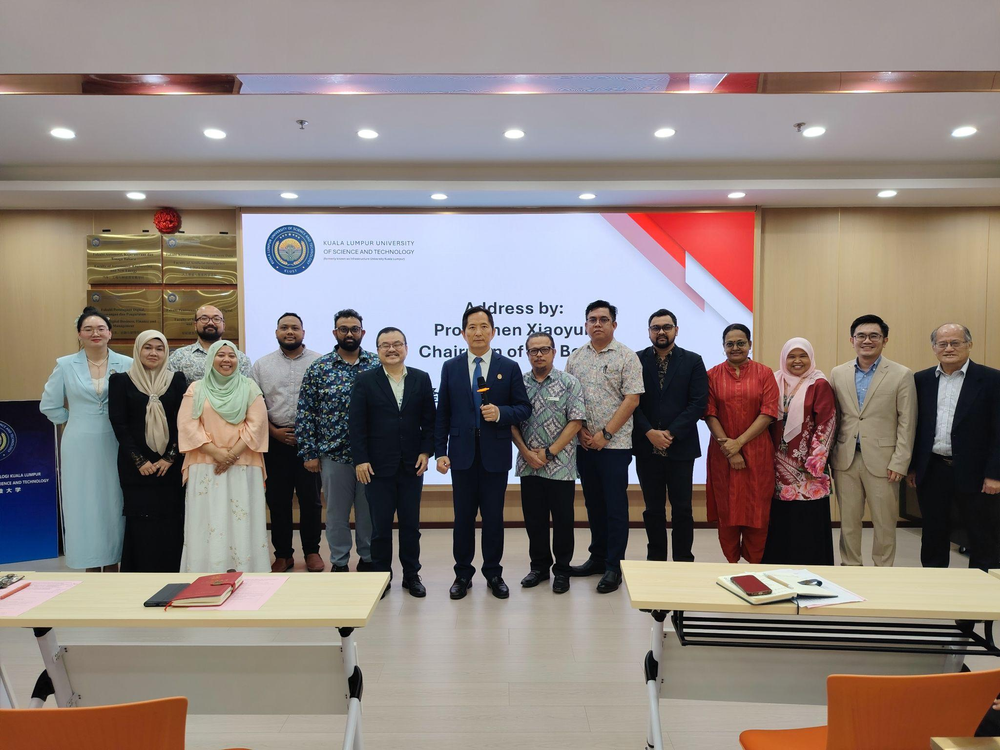
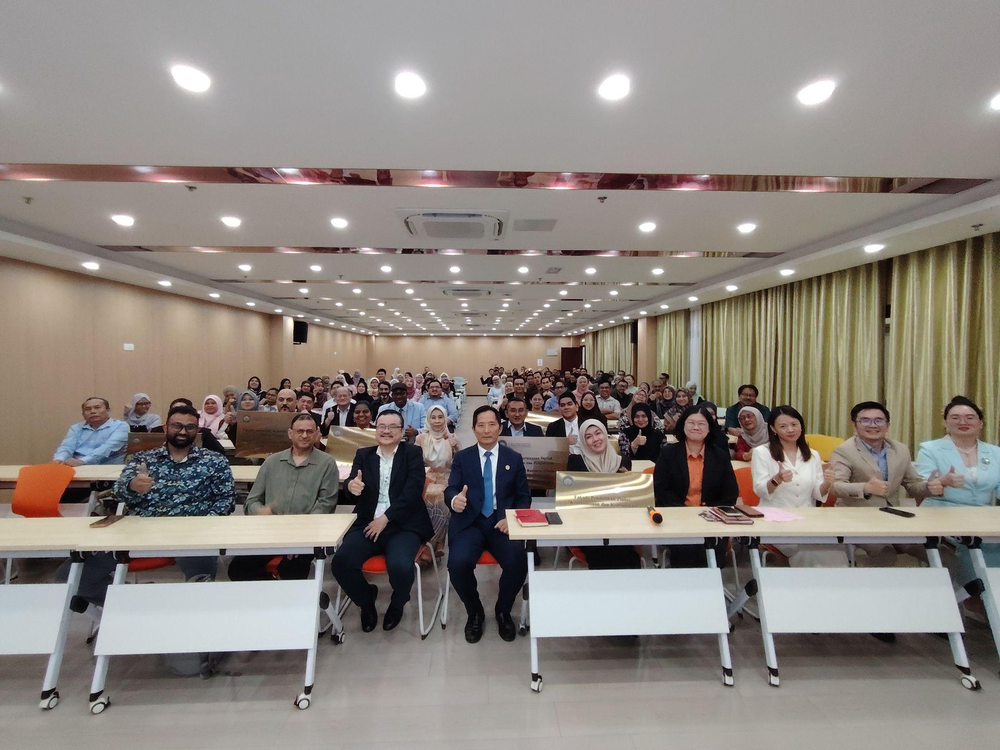
On 19 November 2026, KLUST took a significant step in that direction with the inauguration of seven new faculties and schools. The restructuring represents a shift towards a more specialised academic environment, with greater emphasis on emerging technologies, professional disciplines and industry-oriented education.
The seven academic units and their newly appointed leadership are:
- Faculty of Artificial Intelligence and Data Science – Assoc. Prof. Ts. Dr. Tadiwa Elisha Nyamasvisva, Deputy Dean
- Faculty of Automotive, Engineering and New Energy – Abbas Moloody, Acting Dean
- Faculty of Digital Business, Finance and Management – Prof. Dr. Cheng Boon Liat, Dean
- Faculty of Smart Construction and Digital Arts – Assoc. Prof. Dr. Mohd Nizam Shakimon, Dean
- Faculty of Smart Education, Humanities & Communication – Prof. Dr. Suraya Amirruddin, Acting Dean
- School of Postgraduate Studies – Prof. Dr. Wei Hui Suan, Dean
- School of General Studies, Sports & Arts – Mdm. Nalinah Poongavanam, Dean
The new structure brings together disciplines that reflect the changing relationship between technology, business and society. Its significance, however, will depend on how effectively these academic units translate their areas of specialisation into stronger educational outcomes and meaningful industry engagement.
Moving beyond traditional academic boundaries
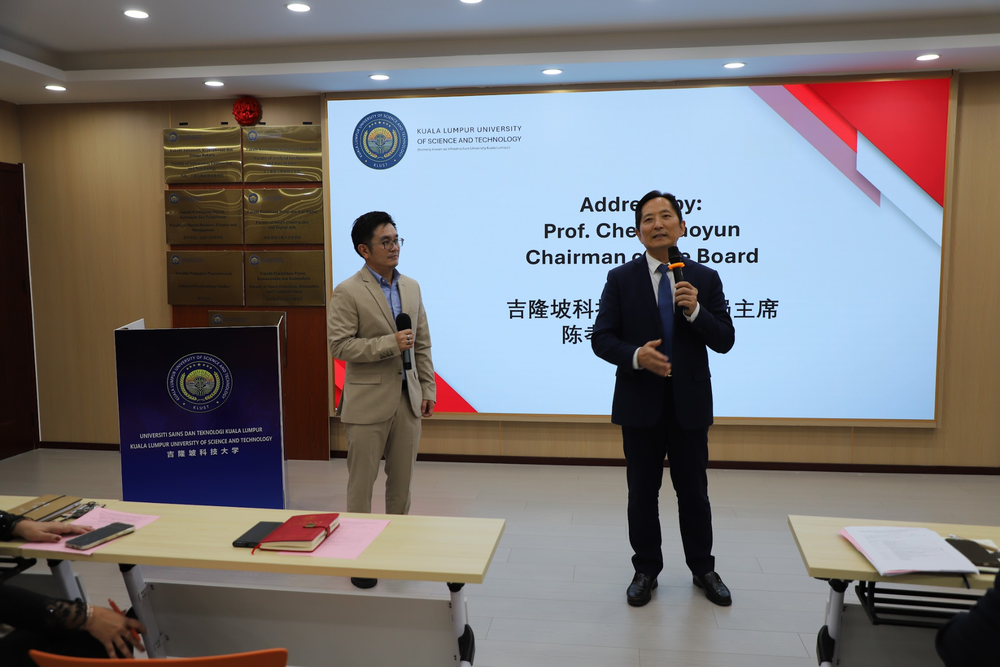
In his address, KLUST Chairman of the Board, Prof. Chen Xiaoyun, outlined a vision for a university that is more closely connected to industrial development. A central theme was the need to move beyond faculty-specific thinking. The university’s automotive and new energy facilities, for example, should function as shared institutional resources. Their value should not be limited to engineering students or researchers. Other academic disciplines should also have opportunities to participate in research and industry collaboration. This reflects an important principle in modern higher education: some of the most valuable developments happen when knowledge crosses disciplinary boundaries.
The Chairman also identified cross-border e-commerce and artificial intelligence talent development as areas of opportunity. In digital arts, he pointed to the commercial potential of creative technology, including animation and visual communication.
These areas demonstrate how KLUST intends to connect academic expertise with emerging economic opportunities. The challenge will be to establish the partnerships and learning environments needed to turn these ambitions into practical outcomes.
The university is also exploring a Global Technology Industry College through collaboration involving a Huawei vice-president. The proposed direction centres on preparing talent for leadership and management roles in major international companies, bringing technology education closer to the needs of global industry.
Academic leadership will determine the pace of transformation
Restructuring provides an institutional framework. Its success depends on the people responsible for translating that framework into academic progress. The Chairman placed considerable emphasis on the responsibilities of the newly appointed deans. He challenged them to develop a deeper understanding of their respective disciplines, including areas beyond their previous professional specialisations. This expectation reflects a broader view of academic leadership. A dean must understand the direction of the discipline while building the institutional relationships needed to advance it.
The Chairman encouraged faculty leaders to establish connections with experienced university deans, corporate leaders and distinguished academics. He also proposed engaging international experts, particularly through networks in Malaysia, China and the United States.
The purpose of these relationships extends beyond professional networking. They can create opportunities for academic benchmarking, joint research and curriculum development. External experts could also contribute to faculty seminars and strategic planning discussions. For KLUST, these connections will be important in developing an academic culture that looks outward rather than relying solely on internal experience.
Research quality must translate into industry value
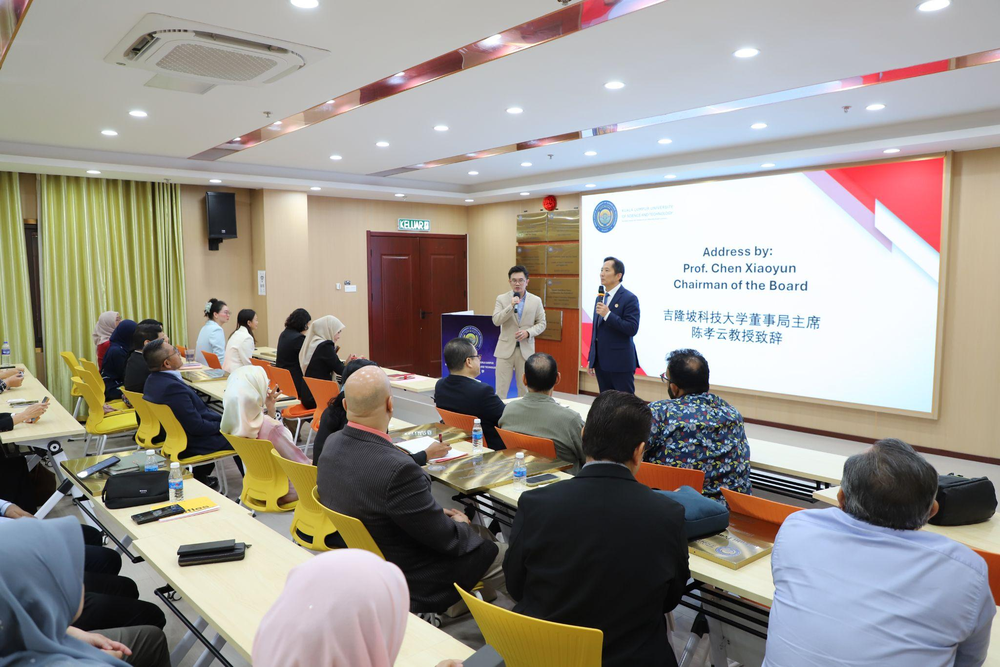
The Chairman’s address also placed research capability at the centre of the university’s longerterm development. He emphasised the importance of attracting doctoral-qualified academics, mentioning the potential addition of approximately 30 PhD-qualified staff in connection with the 2026–2027 period. The specific recruitment target and any revised academic hiring requirements remain subject to confirmation by university management.
Beyond recruitment, the university faces the task of creating an environment where academic research can produce meaningful results. The Chairman encouraged faculty teams to strengthen their teaching approaches and pursue scholarly publications. He also highlighted the role of academic competitions in developing students’ capabilities.
A particularly important direction is the proposed use of laboratories and centres of excellence to strengthen industry-university-research collaboration. These facilities could support engineering research while helping small and medium-sized enterprises improve their technical capabilities.
This approach places greater emphasis on the practical value of academic research. It also creates an opportunity for KLUST to build stronger relationships with businesses seeking solutions to real industrial challenges.
Recruitment and reputation are institutional responsibilities
The Chairman also emphasised that attracting students is not solely the responsibility of the admissions team. Academic and administrative staff also have a role in communicating the university’s strengths and creating a positive institutional reputation.
This perspective has practical implications. Prospective students form impressions of a university through its academic community, campus environment and the experiences of those who study and work there.
KLUST intends to expand its educational visits and study-tour activities in 2027, providing opportunities for prospective students, educators and industry representatives to experience the university’s facilities and academic environment. These efforts place institutional visibility within the broader responsibility of the university community.
Turning institutional ambition into measurable progress
The inauguration of seven new faculties establishes a new academic structure for KLUST. The more significant task now is to demonstrate what this structure can achieve.
New academic units alone do not create academic excellence. Their impact will depend on the quality of leadership, the strength of industry relationships and the university’s ability to translate research into practical applications.
For the newly appointed deans, this means building faculties with a clear academic direction and a stronger connection to their respective industries. For the wider university, it means creating an environment where collaboration is part of how academic work gets done.
The Chairman expressed an ambition for KLUST to become a leading university in the region, describing this aspiration as building the “Stanford of the East”. Achieving that ambition will require sustained institutional development. The unveiling of the seven faculties marks an important starting point. Their long-term contribution will be measured by the quality of graduates they produce, the research they advance, and the value they bring to society