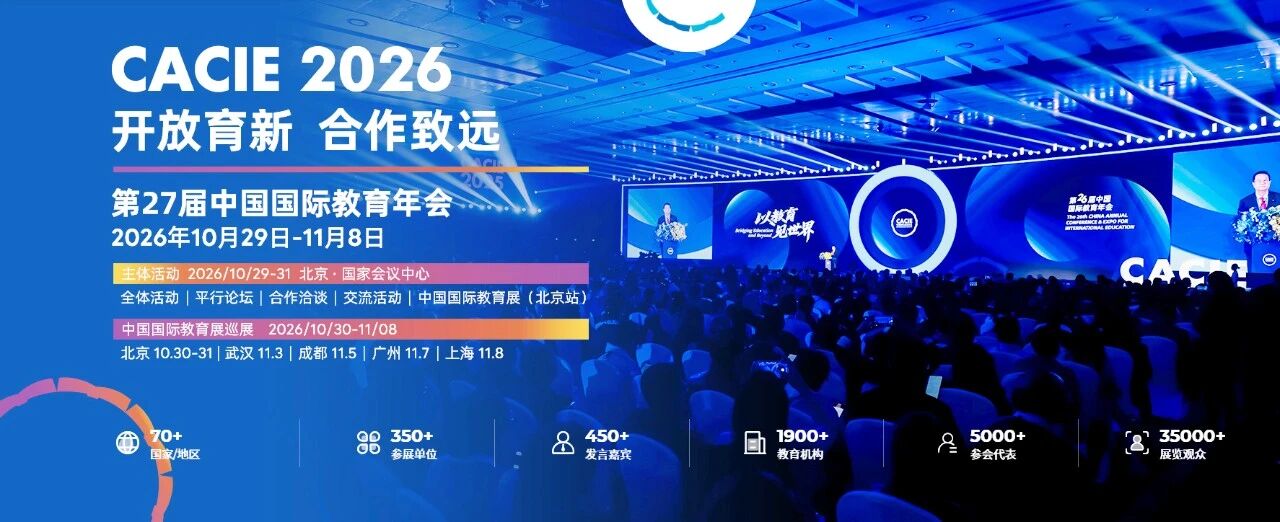
The 27th China Annual Conference for International Education (CACIE) took place in Beijing from 29 to 31 October 2026, bringing together senior government officials, education leaders and international representatives to discuss the future of global education.
The opening ceremony was attended by Cai Dafeng, Vice Chairman of the Standing Committee of the National People’s Congress; Yodchanan Wongsawat, Thailand’s Deputy Prime Minister and Minister of Higher Education, Science, Research and Innovation, who participated virtually; Qu Xing, UNESCO Assistant Director-General for Education, who also joined virtually; and Ren Youqun, China’s Vice Minister of Education. The ceremony was chaired by Tian Xuejun, President of the China Education Association for International Exchange (CEAIE).
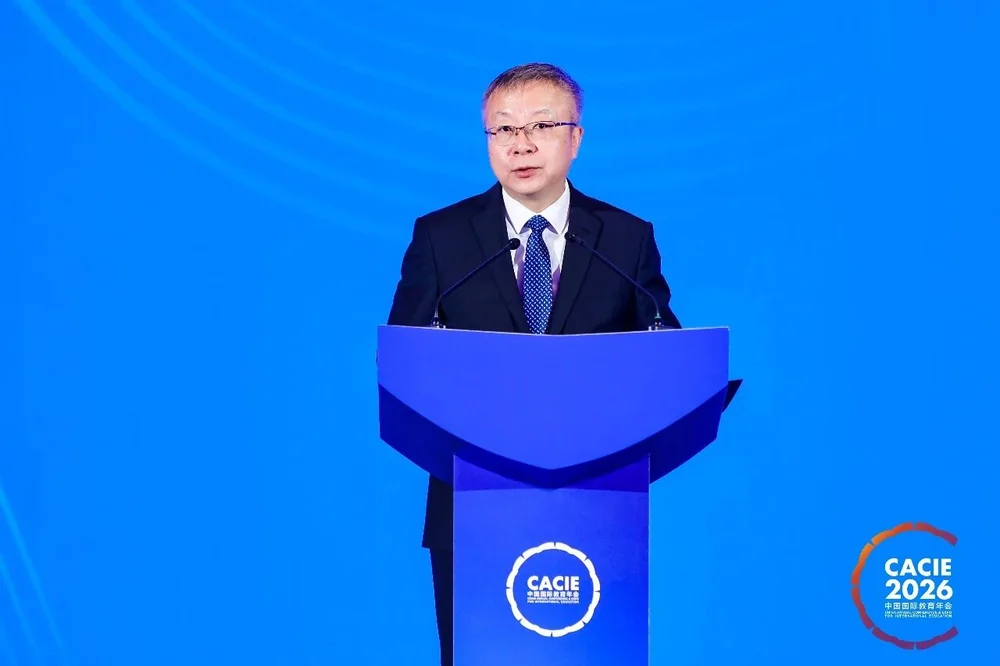
As part of the conference, a parallel forum titled “Reform, Innovation and Practical Exploration in the Internationalisation of Applied Higher Education” was jointly organised by the International Exchange Branch for Application-Oriented Universities under CEAIE and Hefei University.
The forum brought together leaders of China’s application-oriented universities, experts from German universities of applied sciences and representatives from major industries. Discussions focused on internationalisation strategies, industry–education integration and cross-border talent development, providing a platform for practical dialogue between universities and industry partners.
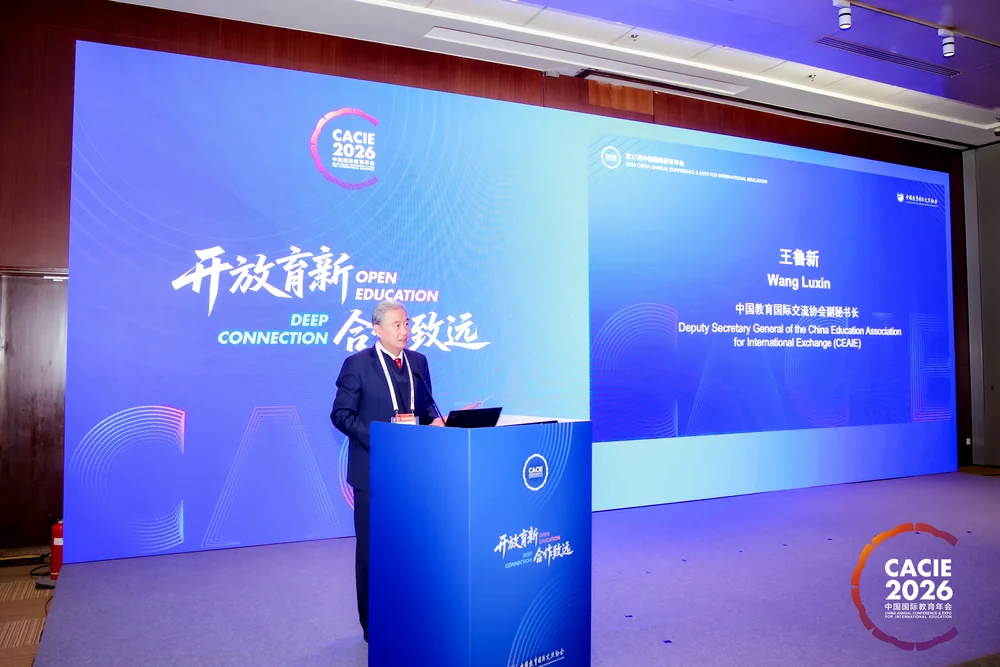
Wang Luxin, Deputy Secretary-General of CEAIE, delivered the opening remarks.
Chen Xiaoyun, Chairman of the Board of Directors of Kuala Lumpur University of Science and Technology (KLUST), was invited to deliver a keynote address. He was accompanied by KLUST Vice-Chancellor Professor Dr Suraya Amirrudin.
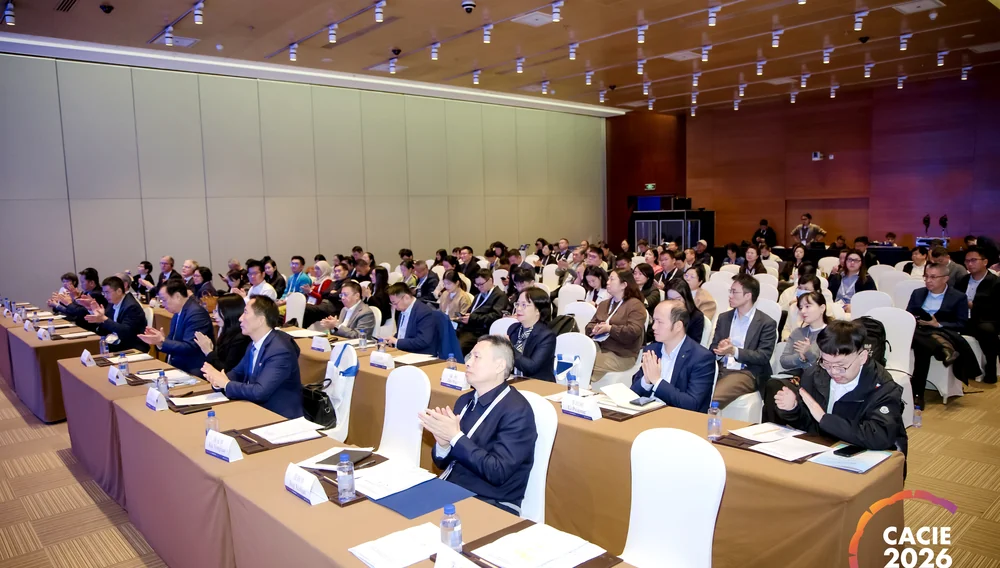
Connecting education and industry through international collaboration
In his keynote address, titled “Connecting Education and Industry Through Technology, Creating a Shared Future Through Collaboration”, Chairman Chen shared KLUST’s approach to international education and its ongoing efforts to strengthen university–industry partnerships.
Against the backdrop of China’s Belt and Road Initiative (BRI), the Regional Comprehensive Economic Partnership (RCEP) and rapid advances in artificial intelligence, he emphasised a central principle:
“Universities should not merely follow industry. They should work alongside industry to shape the future.”
Chairman Chen explained that international engagement among application-oriented universities must move beyond conventional academic visits and student exchanges.
Instead, universities should consider three fundamental questions: What should institutions exchange? What should they integrate? What should they create together?
He highlighted the importance of aligning educational models with industry needs and translating international partnerships into tangible outcomes, including industry-ready graduates, commercially applicable research and technologies, and sustainable institutional collaborations.
His presentation, supported by practical examples from KLUST, generated considerable interest among forum participants.
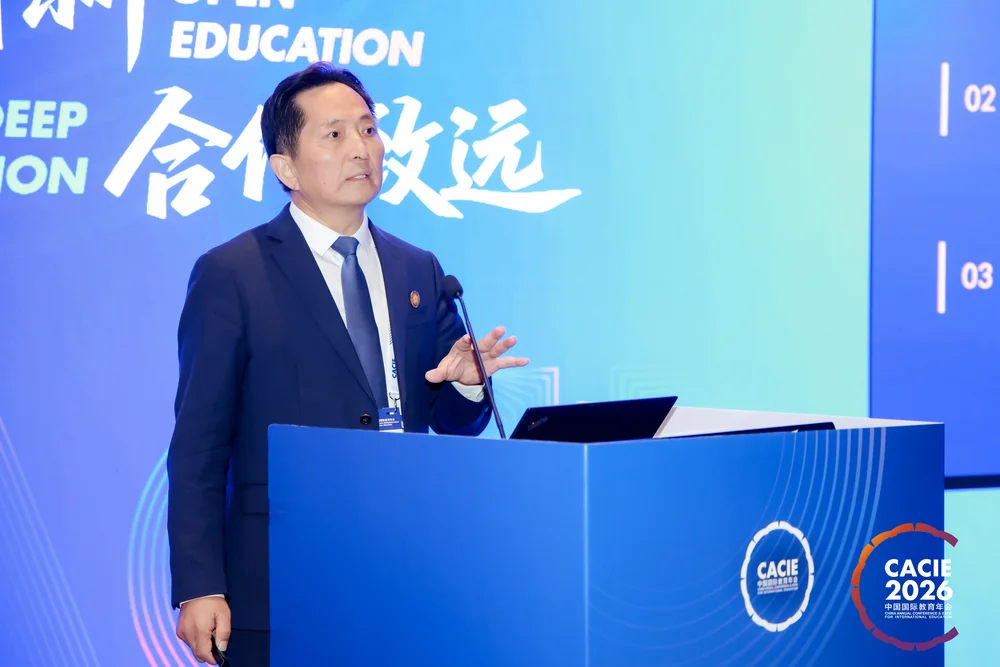
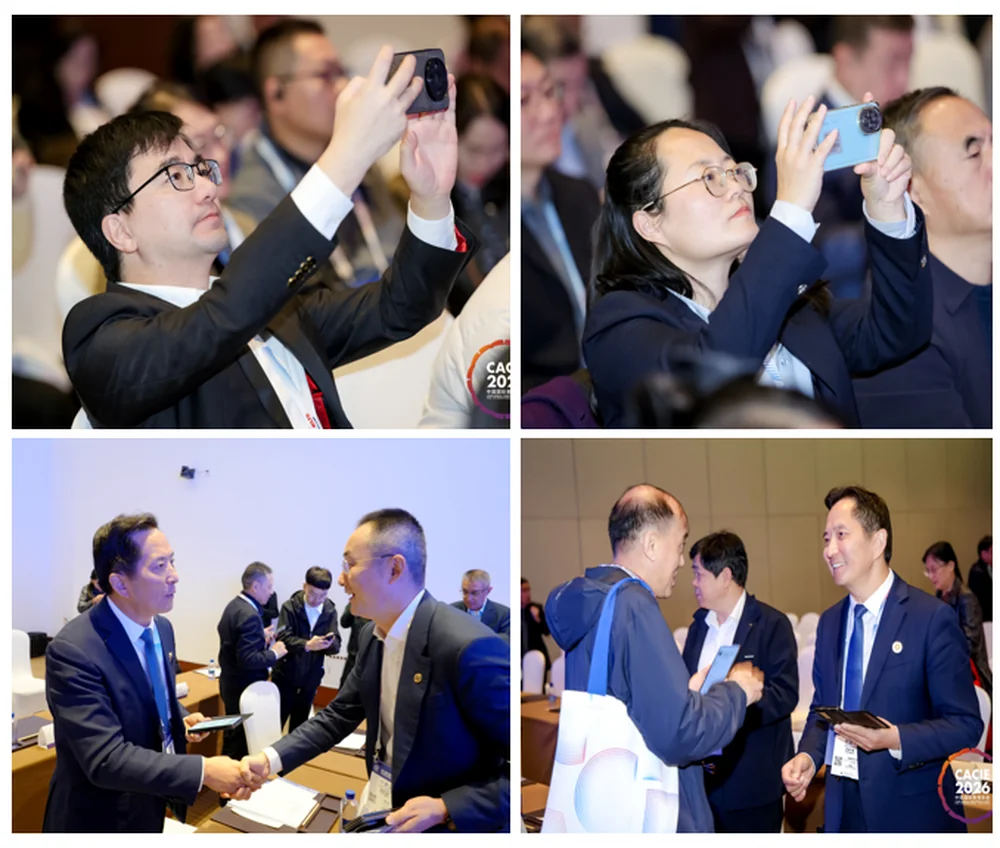
KLUST’s approach to applied higher education
During his closing remarks, Professor Jing Xinhua, Deputy Secretary of the Party Committee and President of Jianghan University, who moderated the forum, expressed his appreciation for Chairman Chen’s presentation.
He described KLUST’s educational model as an example of how application-oriented universities can expand internationally through meaningful partnerships and industry collaboration.
Based in Malaysia and extending its engagement across ASEAN, KLUST has adopted an educational approach built on digital foundations, intelligent technologies and AI-enabled learning.
The university has also introduced its “Four Pillars and Eight Foundations” framework and “Three-Nine Education” talent development model to support institutional development and interdisciplinary education.
These initiatives seek to move beyond traditional academic boundaries by strengthening collaboration across disciplines and aligning academic structures more closely with emerging industry requirements.
Professor Jing also highlighted KLUST’s partnerships with leading companies, including Chery and Huawei, and its efforts to establish an international alliance comprising five industry-focused colleges.
Through these collaborations, KLUST aims to bring real-world industry projects, technologies and professional practices into the university environment, enabling students to gain experience that is directly relevant to evolving workforce demands.
The approach reflects Chairman Chen’s broader vision of universities working alongside industry to shape future opportunities.
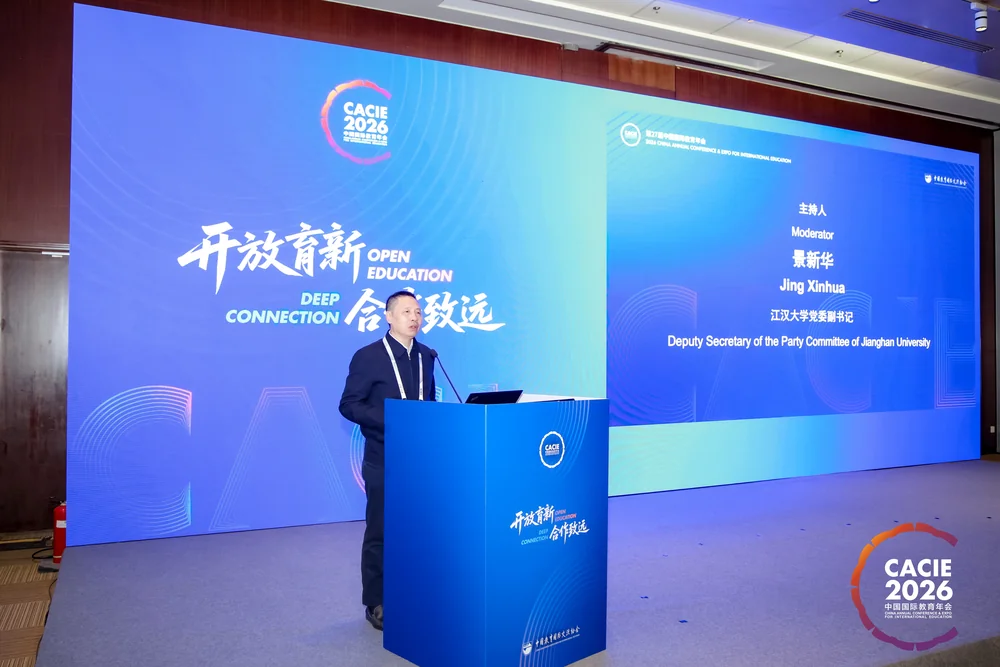
Strengthening cooperation between China, ASEAN and the Global South
Chairman Chen also outlined KLUST’s international cooperation framework, which connects China, KLUST, ASEAN, Central Asia and the Global South.
The framework is designed to support cross-border academic partnerships through joint educational programmes, the international sharing of educational standards, collaborative research and the development of shared practical training facilities.
These initiatives seek to encourage two-way exchanges of educational expertise, technologies and institutional resources.
By connecting universities with industry partners across different regions, KLUST aims to develop a more integrated approach to international higher education, one that supports both talent development and technological collaboration.
The presentation offered practical insights for Chinese application-oriented universities seeking to expand their international presence, participate in Belt and Road cooperation and develop deeper partnerships between education and industry.
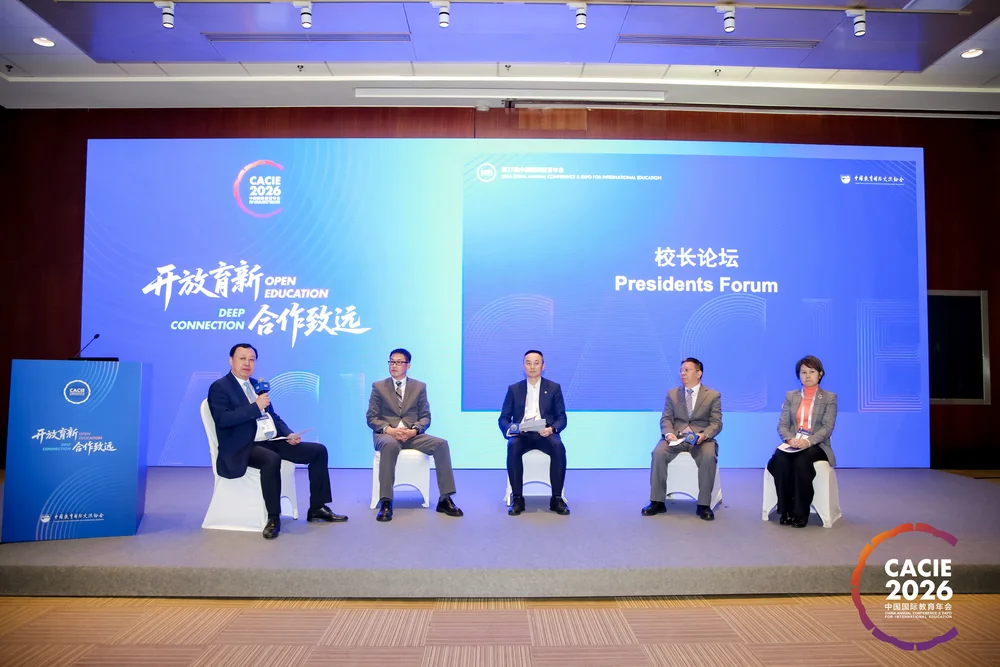
Positive response from international education leaders
Following the keynote address, representatives from participating universities engaged Chairman Chen in discussions on overseas education models, the establishment of industry-focused colleges and the international adoption of vocational education standards.
Xie Baosheng, Vice President of the Yunnan Education Association for International Exchange and former Vice President of Kunming Medical University, described the presentation as one of the forum’s most distinctive and practically relevant contributions.
He noted that the presentation was grounded in KLUST’s institutional experience and demonstrated a strong understanding of China’s policies on international educational cooperation.
In particular, he commended its clear explanation of how application-oriented universities can establish and operate international education initiatives.
Recognising the value of KLUST’s experience, he invited Chairman Chen to Yunnan for further academic exchanges and discussions.
During the subsequent Presidents’ Forum, Cai Jingmin, Chairman of the International Exchange Branch for Application-Oriented Universities under CEAIE, also spoke positively about KLUST’s approach.
He observed that the university had moved beyond traditional institution-to-institution exchanges by integrating talent development, industry partnerships and the international sharing of educational standards.
According to Cai, KLUST’s experience provides a useful reference for Chinese application-oriented universities exploring overseas education, international industry–education collaboration and opportunities under the Belt and Road Initiative.
He added that the university’s approach offered valuable perspectives for advancing the internationalisation efforts of application-oriented higher education institutions.
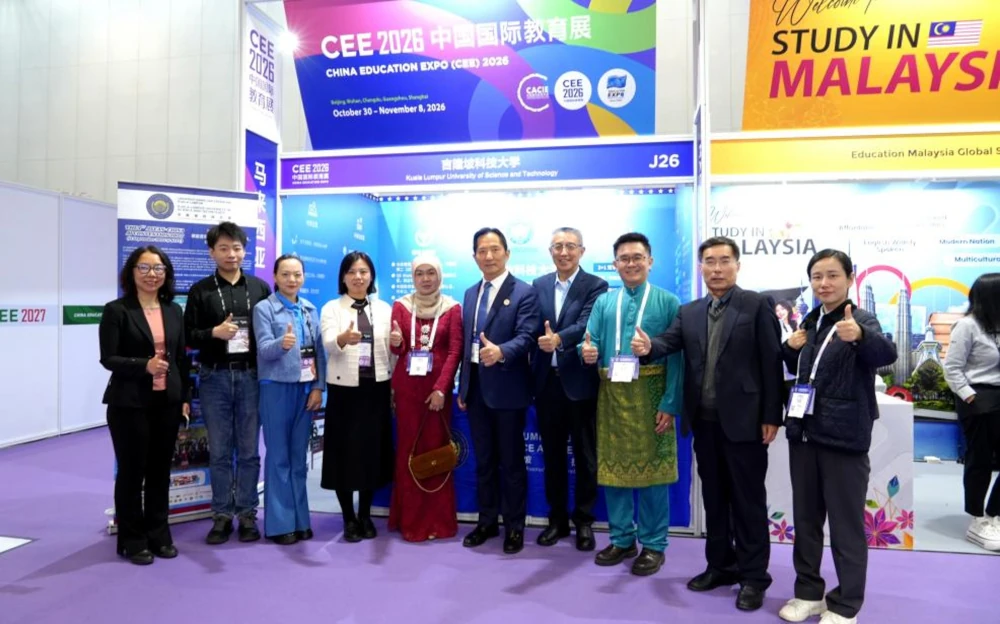
Advancing KLUST’s international engagement
KLUST’s participation in the 2026 China Annual Conference for International Education marks an important opportunity to strengthen its visibility and engagement within China’s application-oriented higher education community.
Building on this participation, the university will continue to leverage its network of Nobel laureates, academicians and academic experts to expand international cooperation and strengthen partnerships with universities and industry.
Future priorities include the development of industry-focused colleges, joint research initiatives and collaborative talent development programmes.
Through these efforts, KLUST aims to contribute to stronger higher education cooperation between China and ASEAN while supporting meaningful educational partnerships across the wider international community. The university remains committed to translating international collaboration into practical educational outcomes and contributing its expertise to high-quality cooperation under the Belt and Road Initiative.